
Blackjack strategy refers to a set of rules and principles that are used to guide a player’s decisions during a game of blackjack. These strategies are designed to help players make the best possible choices for each hand, based on the player’s and dealer’s cards, and maximize their chances of winning. Blackjack strategies can range from simple approaches like basic strategy, which provides a set of rules for making the best decisions based on the cards dealt, to more advanced methods like card counting and shuffle tracking, which require a deeper understanding of the game and a higher level of skill. Overall, blackjack strategy is an essential part of playing the game and can significantly improve a player’s chances of winning.

How to Play Blackjack?
Blackjack is a popular card game played in casinos around the world. The objective of the game is to have a hand value closer to 21 than the dealer, without going over. The game begins with players placing their bets on the table. Once all bets are placed, the dealer deals two cards to each player, and one card to themselves. Players then have the option to “hit” (request another card), “stand” (keep their current hand), “split” (if they have two of the same cards), or “double down” (double their bet and receive one more card). The dealer then reveals their second card and must follow specific rules for hitting or standing. If the player’s hand value is higher than the dealer’s and under 21, the player wins. If the player’s hand value is over 21, they lose, regardless of the dealer’s hand.
Basic Blackjack Strategy
The basic blackjack strategy is a set of guidelines that players can follow to make the best decisions in every possible scenario based on the cards they have been dealt and the dealer’s up card. The strategy is based on mathematical calculations and aims to minimize the house edge and maximize the player’s chances of winning.
Hit or Stand
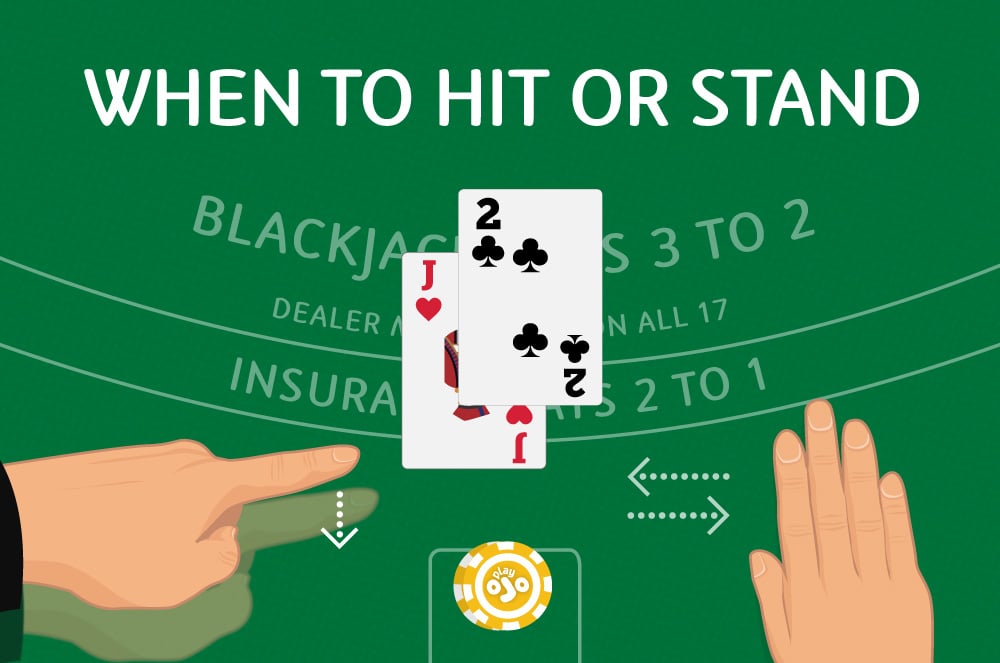
The first decision a player needs to make is whether to hit or stand. The basic strategy suggests that players should always hit if their hand value is 8 or less and should stand if their hand value is 17 or more. For values in between, the decision depends on the dealer’s up card. For example, if the dealer’s up card is 2 to 6, the player should stand on 12 or more, while if the dealer’s up card is 7 to Ace, the player should hit on 12 to 16.
Splitting
If a player is dealt two cards of the same value, they can choose to split them into two separate hands. The basic strategy recommends splitting Aces and 8s, but not splitting 10s, face cards, or 5s. Splitting Aces gives the player a better chance of getting two strong hands, while splitting 8s avoids the risk of having a bad hand.
Double Down
If a player’s hand value is 9, 10, or 11, they can choose to double their bet and receive one more card. The basic strategy suggests doubling down if the dealer’s up card is 2 to 9 for a hand value of 9, 2 to 10 for a hand value of 10, and 2 to Ace for a hand value of 11. This is because the player has a better chance of getting a strong hand, while the dealer has a higher chance of busting.
Insurance
If the dealer’s up card is an Ace, players have the option to take insurance, which is a side bet that pays 2:1 if the dealer has a blackjack. However, the basic strategy advises against taking insurance as it increases the house edge.
Card Counting in Blackjack
Card counting is a technique used in blackjack to keep track of the cards that have been played and use that information to make more informed decisions on future hands. By doing so, players can gain an advantage over the house and increase their chances of winning.
Card counting involves assigning a value to each card that is dealt and keeping a running count based on the cards that have been played. Cards with a value of 2 to 6 are assigned a value of +1, cards with a value of 7 to 9 are assigned a value of 0, and cards with a value of 10 to Ace are assigned a value of -1. As the cards are dealt, players keep a running count in their head and adjust their bets and playing decisions accordingly. A positive count indicates that there are more high cards remaining in the deck, while a negative count indicates that there are more low cards remaining.
Hi-Lo System: The Hi-Lo system is one of the most popular and widely used card counting systems. It involves assigning a value of +1 to cards 2 to 6, a value of 0 to cards 7 to 9, and a value of -1 to cards 10 to Ace. The system works by keeping a running count of the cards that have been played and adjusting the player’s bets and playing decisions based on the count.
KO System: The KO system, also known as the Knock-Out system, is another popular card counting system. It is similar to the Hi-Lo system but has an additional value of +1 for the 7s. The system works by keeping a running count of the cards that have been played and adjusting the player’s bets and playing decisions based on the count.
Omega II System: The Omega II system is a more complex card counting system that assigns different values to each card. It assigns a value of +2 to the 2s and Aces, a value of +1 to the 3s, 4s, and 5s, a value of 0 to the 6s and 7s, a value of -1 to the 8s, and a value of -2 to the 9s and 10s. The system works by keeping a running count of the cards that have been played and adjusting the player’s bets and playing decisions based on the count.
Red 7 System: The Red 7 system is a modified version of the Hi-Lo system that assigns a value of +1 to the red 7s in addition to the regular values assigned in the Hi-Lo system. The system works by keeping a running count of the cards that have been played and adjusting the player’s bets and playing decisions based on the count.
Blackjack Surrender Strategy
Blackjack surrender strategy is a popular technique used by players to reduce their losses when facing a bad hand. There are two types of surrender in blackjack: early surrender and late surrender. In this article, we will explain how each type of surrender works and provide some tips on when to use them.
Early Surrender
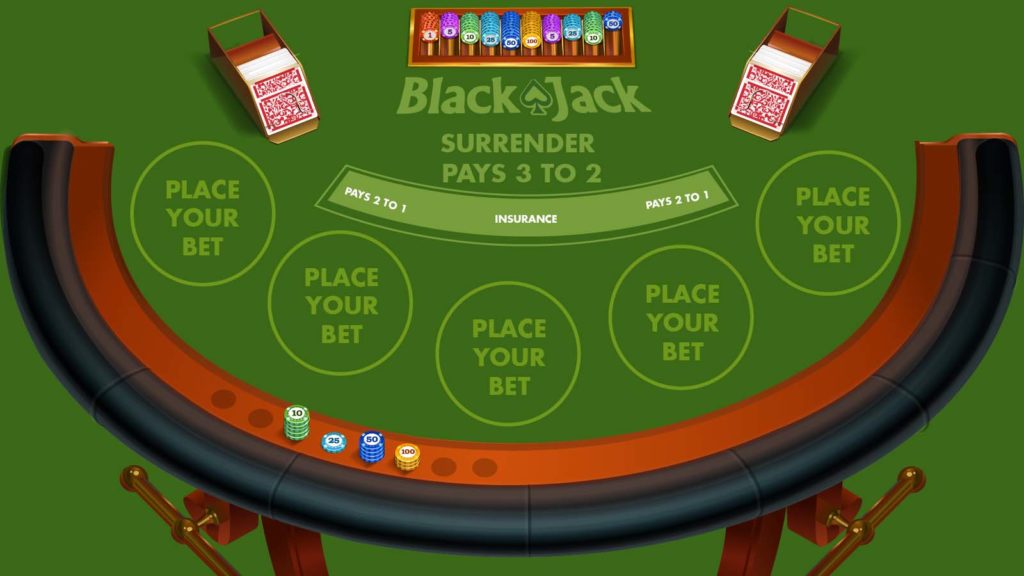
Early surrender is a rare type of surrender that allows players to forfeit their hand and half of their bet before the dealer checks for blackjack. This is the most favorable option for players, as it gives them the opportunity to avoid losing their entire bet if the dealer has blackjack.
To use the early surrender strategy effectively, players need to be familiar with basic blackjack strategy. They need to know when to surrender their hand based on the dealer’s up card and their own hand. Generally, early surrender is only recommended in situations where the player has a weak hand, and the dealer’s up card is a 9, 10, or Ace.
Late Surrender
Late surrender is a more common type of surrender that allows players to forfeit their hand and half of their bet after the dealer checks for blackjack. This option is less favorable than early surrender because the player can only use it if the dealer does not have blackjack. However, it is still a useful strategy that can help players reduce their losses in certain situations.
To use the late surrender strategy effectively, players need to be able to identify the situations where surrendering is more profitable than playing their hand. As a general rule, players should only surrender if they have a weak hand and the dealer’s up card is a 9, 10, or Ace. Surrendering in other situations may result in unnecessary losses.
Combining Surrender with Basic Strategy
To make the most of the surrender strategy, players need to combine it with basic blackjack strategy. This involves understanding when to hit, stand, double down, or split based on the dealer’s up card and their own hand. By doing so, players can make informed decisions on whether to surrender or play their hand.
One popular combination strategy is to surrender when the player has a hard 16 and the dealer’s up card is a 9, 10, or Ace. This is a weak hand that is unlikely to win against the dealer, and surrendering can reduce the player’s losses. Another option is to surrender when the player has a pair of 8s and the dealer’s up card is an Ace. Splitting 8s is not recommended in this situation because the player is likely to lose both hands, and surrendering is a better option.
Additional Blackjack Strategies
There are several other blackjack strategies that players can use to improve their chances of winning. Some of the most popular blackjack strategies.
Progressive Betting: Progressive betting is a popular blackjack strategy where players increase their bets after a win and decrease them after a loss. This strategy is based on the idea that winning and losing streaks tend to occur in clusters. By increasing their bets during a winning streak, players can maximize their profits. However, it is important to set a limit on the amount of increase in betting, as players can quickly lose their winnings in case of a losing streak.
Card Counting: Card counting is a more advanced blackjack strategy where players keep track of the cards that have been dealt and use this information to determine the likelihood of certain cards being dealt in future rounds. This strategy can give players an edge over the casino and can result in higher profits. However, it requires a lot of practice and a good understanding of basic blackjack strategy.
Shuffle Tracking: Shuffle tracking is another advanced blackjack strategy that involves keeping track of the cards as they are shuffled. This strategy requires players to be able to identify clumps of cards that are likely to be dealt together in the next round. By doing so, players can predict the cards that are likely to be dealt and adjust their betting accordingly.
Side Bets: Side bets are additional bets that can be placed on certain outcomes in a blackjack game For example, getting a pair or a certain combination of cards. While side bets can offer high payouts, they also have a higher house edge and are generally not recommended for novice players.
Avoiding Insurance: Insurance is a side bet that can be placed when the dealer’s up card is an Ace. It pays out 2:1 if the dealer has a blackjack, but it has a high house edge and is generally not recommended for players.
FAQ
Conclusion
In conclusion, blackjack strategy is an essential aspect of playing the game and improving your chances of winning. The basic strategy is a proven mathematical approach that provides the best possible outcomes for each hand. However, there are more advanced strategies like card counting and shuffle tracking that can give players an edge over the casino. While these strategies require practice and discipline, they cannot guarantee a win every time. It’s important to remember that blackjack is ultimately a game of chance and luck plays a significant role. By understanding and utilizing the various blackjack strategies available, players can increase their chances of winning and enjoy the game to its fullest.